

Zero tariffs on exports to China do not equate to zero compliance costs. Regardless of destination, a South African trader normally has to comply with the Customs and Excise Act, SARS customs procedures, tariff classification, valuation, rules of origin and any product-specific controls. The Chinese landed cost is therefore made up of the South African export price, freight costs and insurance, applicable Chinese taxes and charges and compliance costs. Among the compliance costs is an additional CHN information code introduced by SARS. From September 4, traders were required to declare CHN in the Additional Information field, according to a SARS notice. To qualify for exemption, the goods must meet the prescribed rules of origin, including product-specific requirements and a valid Certificate of Origin, according to the dtic. Documentation for exports to Japan falls into three groups: SA export documents, transport/ commercial documents and commodity-specific documents. The exact requirements are determined by the HS code and product. Japan Customs lists the invoice, B/L/Sea Waybill or AWB, insurance certificate, freight account and packing list among the documents that should accompany an import declaration. It also states that permits/ approvals and certificates of origin may be required depending on the goods. Exporters must ensure goods comply with Japanese import standards (e.g., food safety, electrical safety). The country focuses on food safety. Under Japan’s Food Sanitation Act, commercial imports of food, food additives, apparatus and food packaging require an Import Notification to the Ministry of Health, Labour and Welfare. Hong Kong, which is used as a gateway for SA exports to the Far East, operates as a free port which generally does not impose customs tariffs on imports, according to the Trade and Industry Department of the Government of Hong Kong Special Administrative Region. Licensing is, however, required for the import and/or export of some goods to fulfil international obligations or obligations undertaken by Hong Kong to our trading partners, or to meet public health, safety or internal security needs,” it states. South African exports to Hong Kong were valued at around $1.86 billion (R34bn) during the 2025 calendar year, according to United Nations COMTRADE data. Subject to certain conditions, shipping companies, airlines and freight companies that have registered with the Trade and Industry Department are exempted from the import/ export licensing requirements for their transhipment cargoes. ER
Stringent regulatory framework for SA exports
Ed Richardson· 1 Oct 2026
© Now Media. This content is protected by copyright and may not be adapted or republished. To discuss cooperation opportunities, contact us.
Sign up to receive our newsletters
Get the latest from Freight News delivered to your inbox.

News
AMIE challenges extension of chicken duties
11 hours ago
Customs / Imports and Exports

SA plugs into AI-powered warehousing trend
11 hours ago
Logistics / Technology


Hulamin outlines CBAM verification challenge
12 hours ago
Customs / Imports and Exports / International

Maersk warns of East Africa cargo delays
12 hours ago
Imports and Exports / Sea Freight


New TRN requirements proposed for vehicle owners
12 hours ago
Logistics / Road/Rail Freight


Mozambique service base planned for Rovuma LNG
12 hours ago
Energy/Fuel / Technology


CMES and RINA explore AI-driven vessel operations
12 hours ago
Sea Freight / Technology


ITAC proposes rebate paperwork fix for OEMs
9 Oct 2026
Customs / Trade/Investment

New set of skills required
9 Oct 2026
Freight & Trading Weekly / People / Skills & Training


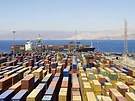
Dtic targets wider export markets
9 Oct 2026
Imports and Exports
Comments (0)