

Airfreight volumes between Europe and South Africa are described as “sporadic” by Jarryd Niescior, director of operations at Aero Africa – Sub-Saharan Africa. “Volumes to and from Europe as a whole remain sporadic, making forecasting challenging. Driving factors behind this could be the constant change in fuel surcharge prices across the globe directly impacting the cost to carry goods,” he told Freight News. The result is that shippers are unable to plan accurately for airfreight costs. “We are seeing carriers constantly changing/imposing additional surcharges to supplement the ongoing change in fuel charges, resulting in unstable market rates,” he added. To support shippers, Aero Africa has enhanced its service offering across Europe through the establishment of additional consolidation gateways across the continent, says Niescior. “The opportunity in this lies within providing a value add to our customers through stable airfreight solutions to unstable markets through our BSAs (block space agreements) as well as strong relationships with carriers,” he added. The impact of the closure of the Strait of Hormuz on jet fuel costs is highlighted by the International Air Transport Association (IATA) in an update. “Jet fuel availability is threatened, and the price has roughly doubled since late February. “With Hormuz-linked flows representing roughly one-fifth of global seaborne jet fuel trade, competition for limited supply has intensified, particularly in Europe, the US West Coast and parts of Asia, raising the risk of localised shortages alongside higher costs. “Air cargo continues to play a stabilising role in global trade, but growth is slowing as the Middle East conflict curtails effective capacity and disrupts hub connectivity. “After a strong start to the year, cargo demand is now expected to grow by just 0.7% in 2026. “Capacity shortages, especially in passenger bellyhold, are tightening the market and pushing adjustment toward higher yields rather than volume expansion,” it adds. Airlines have been affected, with IATA forecasting a combined total net profit of $23 billion in 2026, which is roughly half the previously projected $41bn. Cargo revenue is forecast to reach $162bn in 2026 (up 7.2% on $151bn in 2025). Cargo growth measured in cargo tonne kilometres (CTK) is expected to expand by just 0.7% in 2026 (and just 0.2% in terms of actual cargo uplifted). ER
Fuel costs drive airfreight uncertainty
Liesl Venter and Ed Richardson· 3 Sep 2026
© Now Media. This content is protected by copyright and may not be adapted or republished. To discuss cooperation opportunities, contact us.
Sign up to receive our newsletters
Get the latest from Freight News delivered to your inbox.

News

Lesotho road opens alternative truck route
Melisa Ntephea15 hours ago
Africa / Road/Rail Freight


Freight competitiveness depends on logistics reliability – SAFLA
Melisa Ntephea35 hours ago
Customs / Logistics / Sea Freight


Arms volumes hit highest levels since the Cold War
Ed Richardson35 hours ago
Imports and Exports / International / Logistics

Global trade outlook improves despite tariffs and conflict
35 hours ago
Customs / International / Technology / Trade/Investment
BB
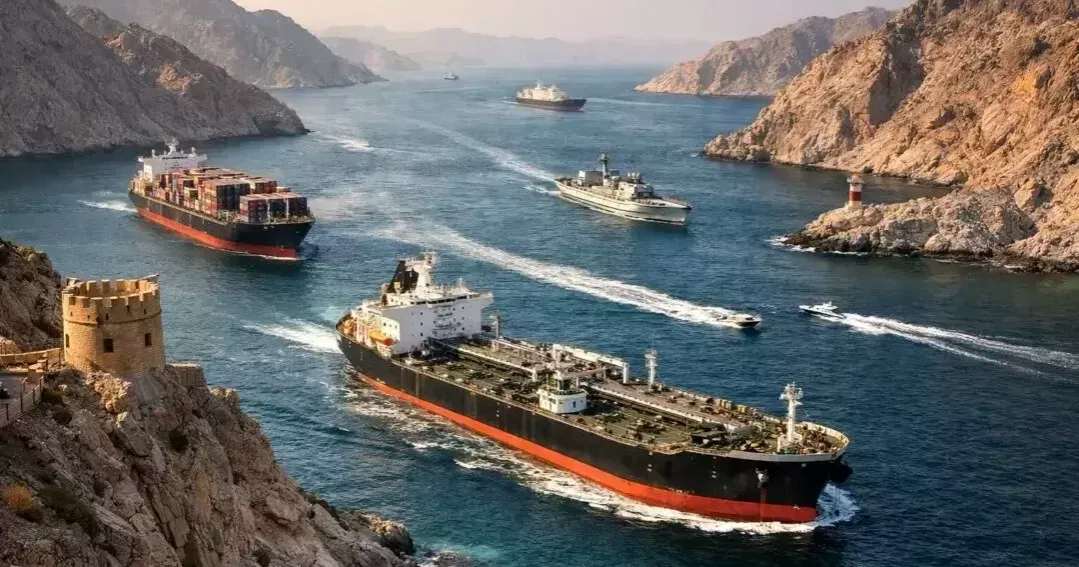
Hormuz attacks put shipping and freight costs under pressure
36 hours ago
Energy/Fuel / Imports and Exports / International / Sea Freight


Durban’s freight community connects at Thirsty’s – see the pics
13 Oct 2026
Events / Freight & Trading Weekly


R2.2bn investment targets iron ore corridor
13 Oct 2026
Road/Rail Freight / Trade/Investment




Training should target competency gaps
13 Oct 2026
People / Skills & Training

Comments (0)
Comments are closed