

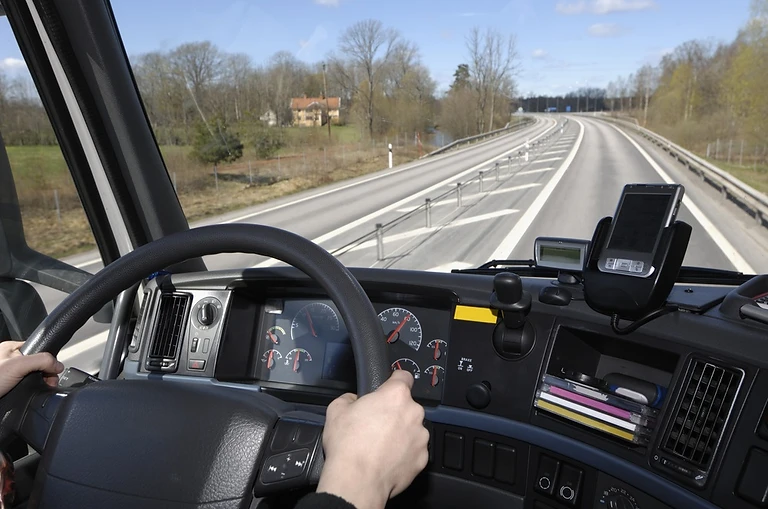
Two recent high-profile truck accidents have once again put the spotlight on driver behaviour with logistics specialists promoting the use of technology to create safer drivers and ultimately save lives.
In one incident, the driver of a diesel tanker was killed in a fire which broke out after he slammed into the back of another truck on the N4 highway in Limpopo on Friday, July 7.
“Modern technologies are available that can assist fleet managers to easily compare driving performance by individuals and groups of employees, enabling them to identify the best and the worst performing drivers, so that they know which drivers to reward and which to send for training,” says Hein Jordt, managing director of Ctrack Fleet Management Solutions.
It is this kind of technology that Arend du Preez, managing director of logistics company, Crossroads, makes use of. “Besides tracking we also use technology that enables us to monitor bad driver behaviour such as speed, excessive idling and harsh braking,” he said. “Vehicles are also equipped with in-cab cameras that are automatically turned on when a potentially unsafe incident occurs. This could include harsh braking, a vehicle being in an accident or when the correct following distance is not being maintained.”
He pointed out that the camera recordings were automatically dispatched to fleet managers who would make the call to re-train and/or closely monitor or manage offending drivers. The technology also includes a driver rating system, with Du Preez explaining that as soon as soon as the driver’s rating dropped below 80% he was seen as an accident risk.
“The driver will then be taken off the road and will undergo evaluation to ensure his rating is above 80% before he is allowed to drive again,” says Du Preez.
Jordt suggests that drivers should attend regular driver training courses to improve their skills. “I recommend that a driver goes for training at least twice a year. Training courses should also be relevant, especially for truck drivers that carry specialised or dangerous goods,” he said. “Fleet operators need to design training plans and set realistic goals by which to measure a driver’s progress. There must also be engagement between management and drivers to reinforce the goals set.”
It is also part of Crossroads policy for drivers who have returned from annual leave to undergo a classroom-based refresher course before they are allowed behind the wheel of a truck.
“Our biggest fear is having one of our trucks involved in an accident,” says Du Preez. “Aside from the potentially fatal consequences, it can also negatively impact our brand. Driver safety should be a major focus within any logistics company.”























Comments (0)
Comments are closed